
Flow Spirit Mentoring
Navigating Spiritual Emergence/y
A 3 month mentoring programme to turn the extraordinary into the ordinary
Spiritual emergency doesn't announce itself politely. It arrives through psychedelics, in the middle of labour, through meditation gone further than expected, through grief, through the body cracking open in ways you didn’t know were possible.
What's needed isn't management. It's someone who knows the territory — who has read the maps, walked with enough people in the dark, and understands that what's happening to you is neither madness nor enlightenment but something that requires both rigour and reverence to move through. That's what this is.
There's a point in some experiences where the frameworks you arrived with stop working. The psychological, the spiritual, the medical — none of them quite fit. That’s where mentoring in non-ordinary states integration comes in. It is mentoring in the oldest sense — from someone who has mapped the territory you're in, across traditions and across years of working with people who've been through it.
I draw on my training and experience in shamanic energy medicine, Integral Somatic Psychology™, Comprehensive Resource Medicine, arts therapy and 25 years inside the traditions.
I refer to the clinical literature on spiritual emergency to build a framework specific to you — what happened, what it means, what it's asking of you, and how to come back into your life carrying it rather than being carried off by it.

“Lou helped me navigate through one of the toughest and most transformational times in my life. Working with her was like working with a long lost friend who knew exactly who I was, and showed me the vision. Through many practices, she helped me get back on my feet and more connected with myself than ever before. Often I would think to myself, “she just gets it.” I can’t imagine where I would be today without the work we did together.”
jules update talk link to lt.com
The London Philosophy Society talk, without hesitation. Use the TEDx as a badge — the logo, the mention, the credibility signal that people recognise — but link to the LPS talk as the actual piece of work to watch
"as seen at TEDx / London Philosophy Society / British Psychological Society"
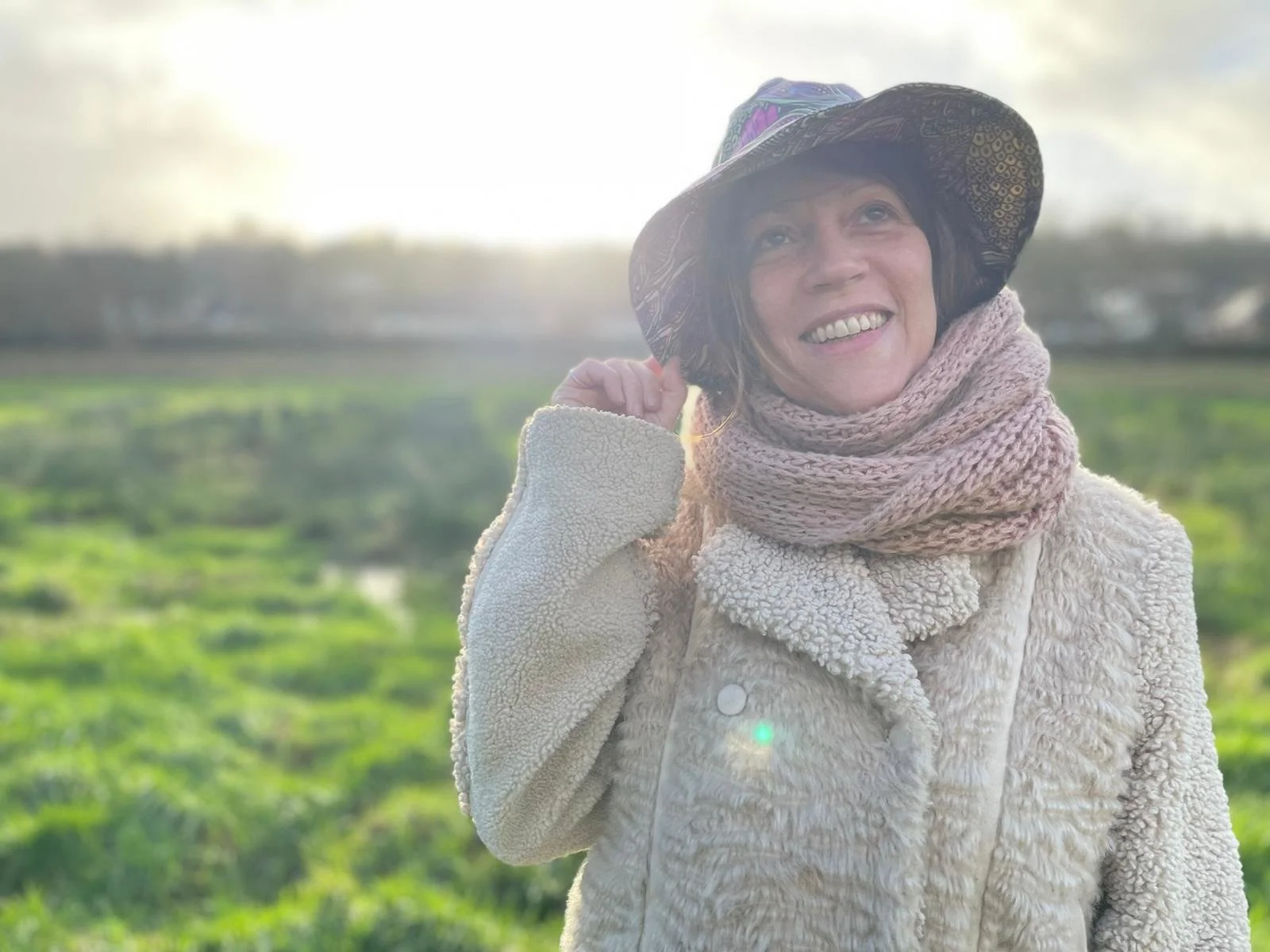
candid from somewhere you feel at ease, or a semi-posed shot where you're actually doing something rather than smiling at a camera. Outdoors works well — it grounds the page without making it crunchy.
The second image should be the gravitas image — from the LPS talk or the BPS talk, you at a lectern or panel, caught mid-thought rather than mid-smile.
longer quote versions and claude choose quotes
What experience has brought you to this work, and when did it occur? Are you currently working with any medical or psychiatric professionals? What are you hoping the next three months might make possible? Have you had previous therapy or other support?
rewrite some neuroscience etc from blog 7 !
a condensed version of the full synthesis — stripped of the academic references, written in your voice rather than mine — is also the right foundation for the Threshold mentoring page and potentially for an "Intellectual Framework" or "The Territory" section on the website. Not a blog post there, but a quieter, denser piece of writing that a sophisticated reader can find if they want to understand the thinking beneath the service.
homepage box
horizontal band across the page, below your other offerings, separated by enough whitespace that the eye registers a pause before arriving at it. The visual logic is: here are the things I do, and then — below a breath — here is something of a different order entirely.
How it looks different.
Your other service boxes are presumably light — white or off-white background, clean typography, accessible feel. This one inverts that. A deep background: dark forest green, aged slate, or a very dark warm grey — something that reads as depth rather than darkness. Not black, not gothic, not heavy — but unmistakably quieter and more serious than what sits above it.
The headline "When the opening won't close" should arrive in a serif font if your site uses sans-serif elsewhere — the switch in typeface alone signals a register change. If you're already in serif, make it larger, more widely tracked, more considered. It should feel like it takes up space deliberately rather than filling a content slot.
The subline — For those navigating what ordinary frameworks can't explain — sits beneath in a smaller weight, restrained, almost reluctant. Not a sell. A description.
The CTA should not be a filled button in your site's accent colour. A simple text link with an arrow, or a very quietly bordered button
uses is a landscape image with liminal quality — the kind of image that evokes being between one state and another. Specific options that would work: a path disappearing into dense forest at low light; a doorway or archway opening onto something you can't quite see; water at dusk with a horizon line; a figure seen from behind standing at a threshold of some kind; bare winter trees against a pale sky. Something that holds the quality of the territory without illustrating it literally.
This image either sits as a full bleed behind the text with a dark overlay so the words read clearly, or it occupies the left half of the band while the text sits on the dark-toned right half. The first option — full bleed with overlay — is stronger because the image becomes the atmosphere of the entire section rather than a panel competing with the copy.
In practice, scrolling down your homepage, it looks like this:
Your hero. Your general positioning. Your other services in their clean light grid — flow states, coaching, whatever else you offer. Whitespace. A thin separator line or simply generous empty space. Then the page darkens. Full-width band, the liminal landscape beneath a dark overlay, and in the centre or slightly left of centre, in quiet serif type:
When the opening won't close.
Beneath it, smaller: For those navigating what ordinary frameworks can't explain.
And below that, restrained: Threshold — three-month integration mentoring → Find out more
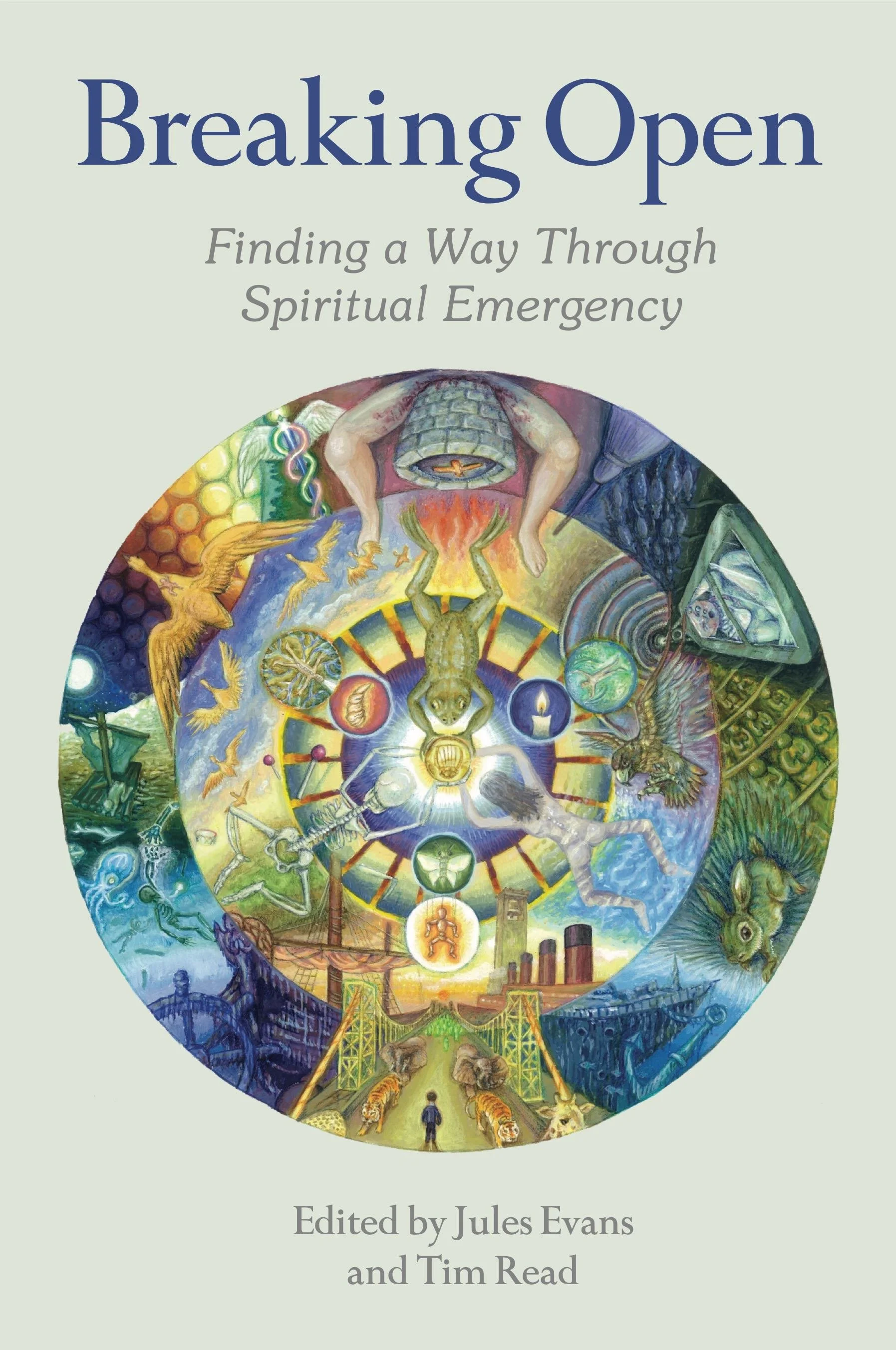
I am a contributing author to Breaking Open: Finding a Way Through Spiritual Emergency (edited by Jules Evans), the field's primary anthology on this subject. I have spoken on spiritual emergency at the British Psychological Society, the London Philosophy Society, the Psychedelic Society, and TEDx.
My training spans integral somatic psychology, the Comprehensive Resource Model, yoga nidra, flow states and performance psychology, energy medicine, and shamanism.
I have mentored people through spiritual emergency arising from psychedelics, kundalini awakening, meditation, labour, and spontaneous opening — across a wide range of intensity and complexity.
Lou’s chapter in Breaking Open is often highlighted by readers as particularly moving and beautiful. Her talks also deeply connect with audiences. She has the ability to mix together poetry, psychology and spiritual wisdom, with humour and empathy.
Jules Evans — author and editor of Breaking Open: Finding a Way Through Spiritual Emergency and ecstatic integration
2 lines excerpt
“Navigating non-ordinary states is a fascinating, mystical experience. Having someone as gifted as Lou guiding me has allowed me to flourish and walk my path with confidence. An expert horse tamer for the soul.”
Ts and Cs etc
Please Note: This is mentoring, not therapy. It is not a substitute for psychiatric assessment if that's needed. I maintain a clear referral pathway and name it. I work with meaning-making, integration of experience, and cross-traditional frameworks — not diagnosis, not medication management, not crisis intervention in the acute sense.
“At times when I feel like the fire inside me has died down to a single ember, Lou takes that ember and gently fans it until the flames start to flicker again. There is no one I’d rather have beside me on this adventure. The magic in her is truly contagious.”
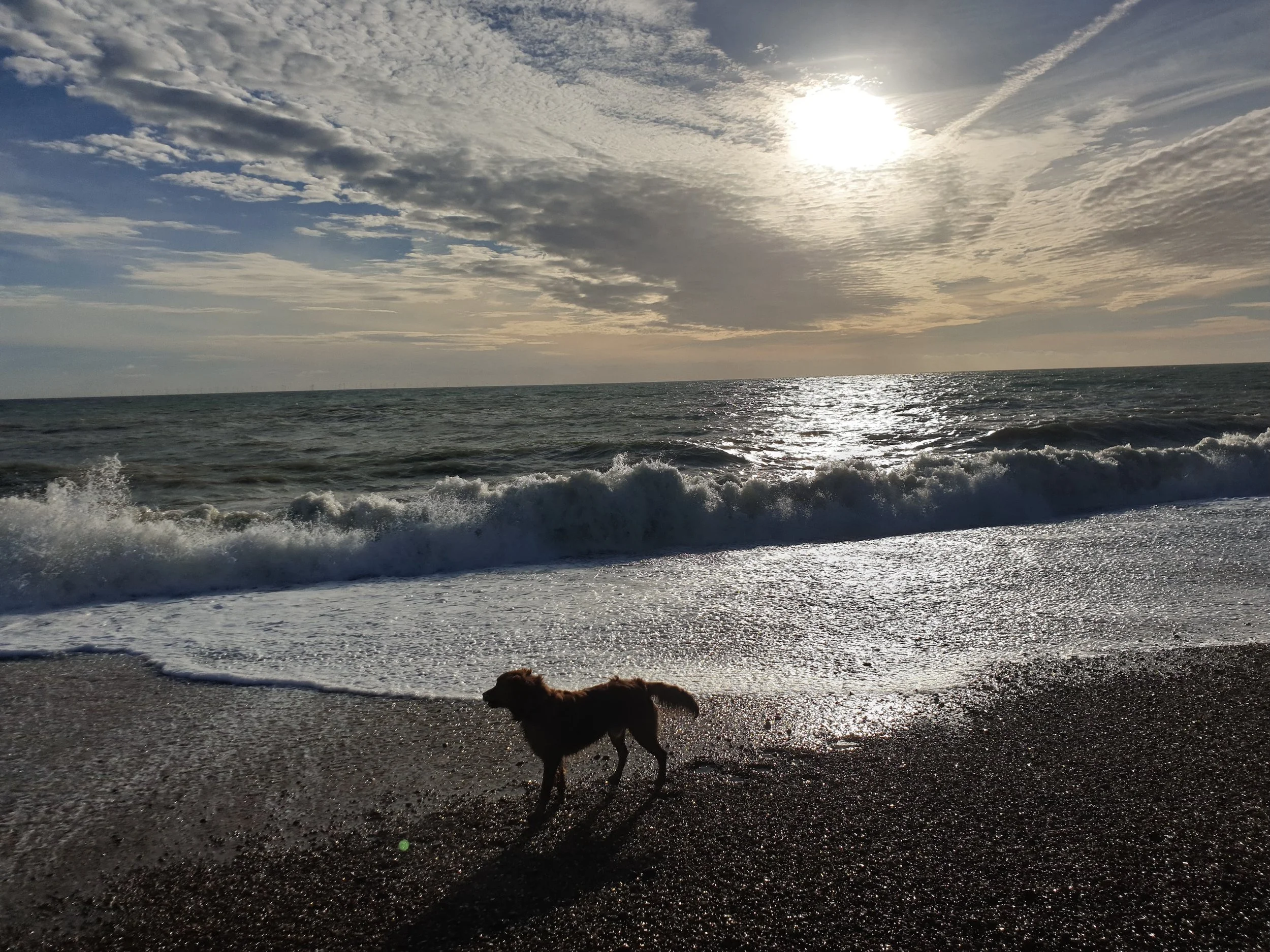
Give course to the songline soul,
as rivers find their way to ocean
through every breaking point.
The river goes nowhere,
and we go with it -
i
n the borders of this body,
singular, infinite.